Comparison Item
Free with computer purchase
Chengcheng vDisk
Issues to address
Set up the machines, restore them when they break, that's it. It doesn't care about what the machines run daily, who uses them, or when.
Make machines truly usefulThe environment follows the user and schedule: schools open courses based on timetables, companies allocate workstations by position and shift.
Multiple environments
One computer lab, one fixed environment. If a school changes a course or a company changes a project, the entire batch must be reinstalled.
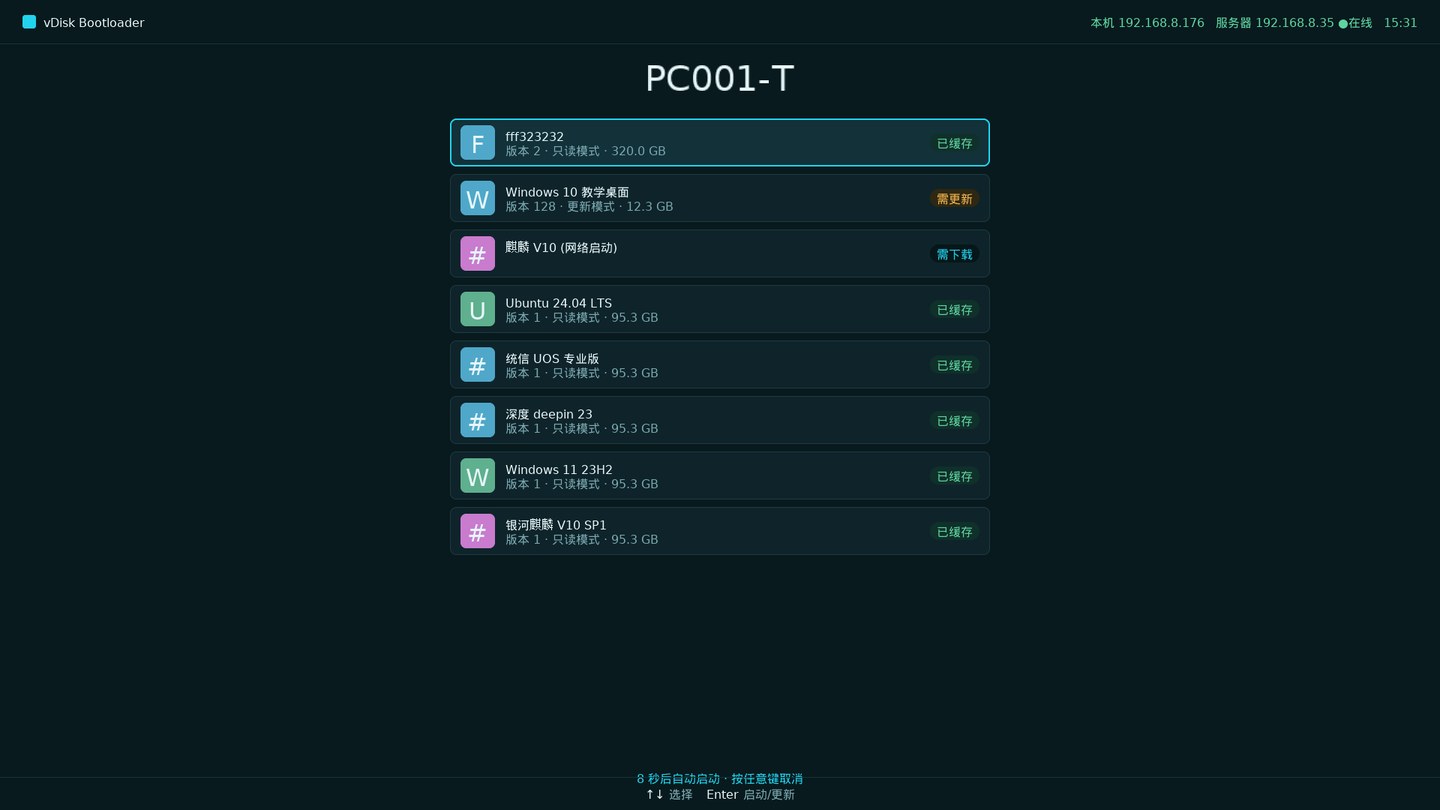
Multiple system images coexist, switch anytime. Schools have one set each for Python / AI training / 3D / domestic IT stack; enterprises have one set each for design / finance / production line / internal training.
How many types of machines can it manage?
Basically only recognize machines of its own brand. If schools purchase in batches and switch suppliers, they have to operate two or three backends simultaneously.
HP, Lenovo, and Dell mixed in one backend, A single master image manages heterogeneous endpoints.
Domestic IT stack / Linux
Most are products from the Windows era, and are basically not supported by Kylin or UOS. When domestic IT stack adoption comes, the entire set must be replaced.
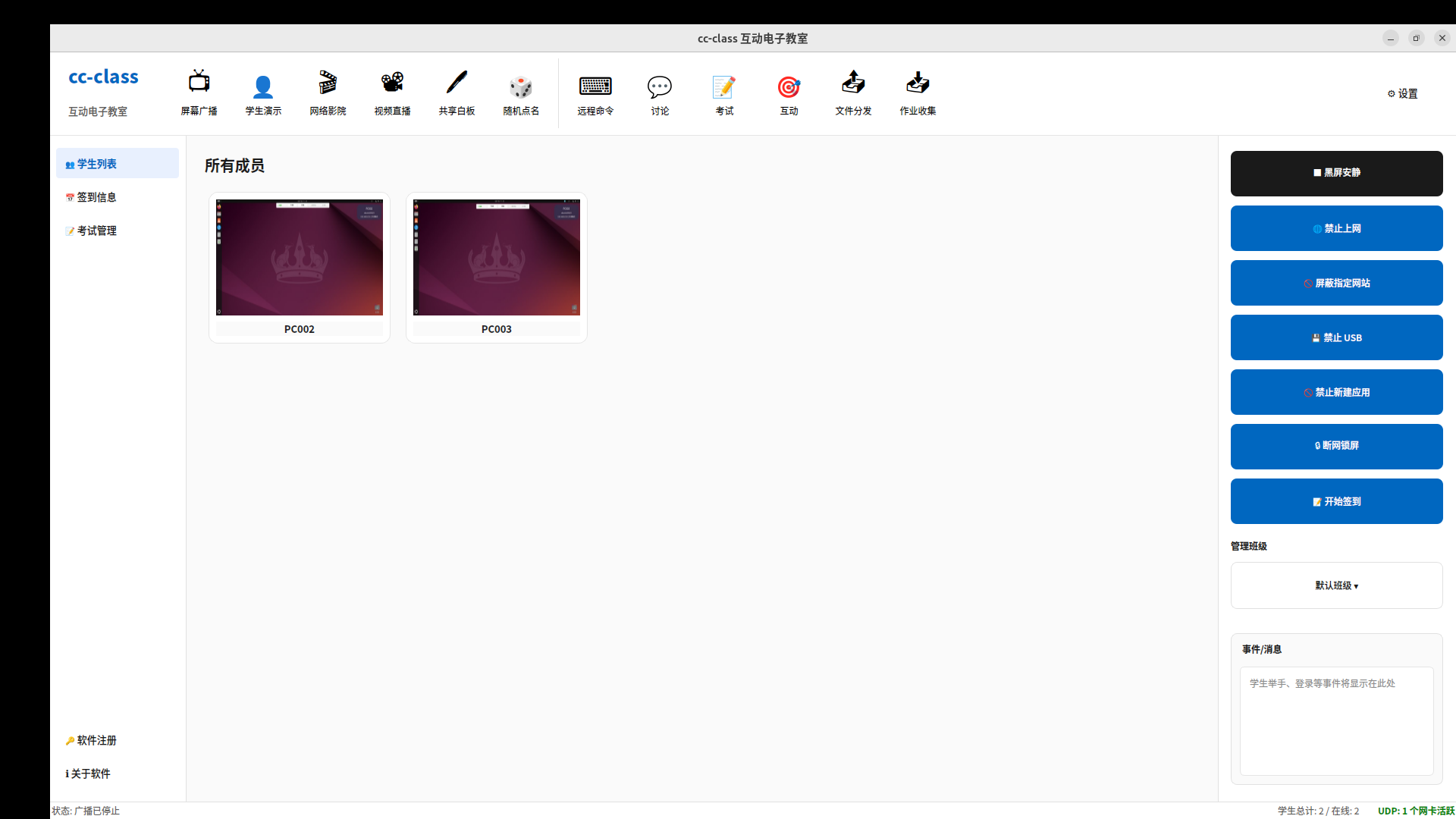
Native support for Kylin and UOS, Kunpeng / Phytium / Loongson / Hygon have all been adapted; the classroom management software is a true Linux edition.
Does it require a specific CPU?
Mostly based on the ready-made Intel TCI solution, locked into the Intel platform. If you purchase AMD or domestic CPUs, it won't keep up.
Pure self-developed engine, does not use TCI, not tied to any chip vendor. New platform can be adapted whenever needed.
Is it a one-time deal?
Once the machines are sold, the software basically stays at that version. Two years later, newly purchased computers can't install it, and new systems can't recognize it.
It's not a one-time deal. For twenty years, new versions have been released continuously. V5 was just released; existing customers can still upgrade.
Is there AI?
No. When a fault occurs, the network administrator still has to go to each machine one by one and check the logs line by line.
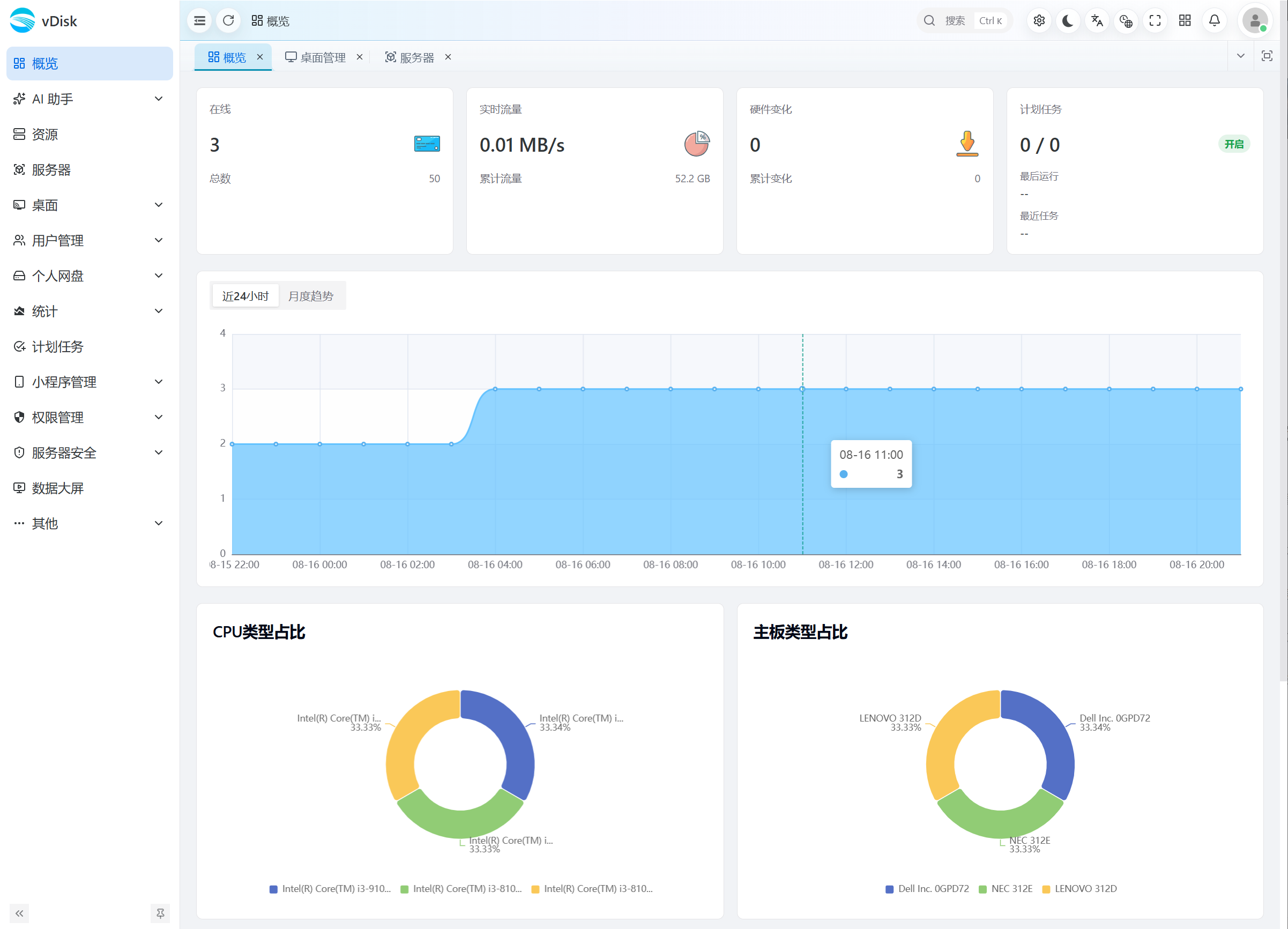
AI assistant troubleshoots on its own: Screen capture, log reading, switch port inspection for evidence, and regular automatic inspection of disks and database.
Who to contact if issues arise?
Most of the software is outsourced to small vendors. Error reports are escalated level by level, and often no one can be found to modify the code.
R&D in Shanghai, no subcontracting. AI-handled issues are transferred to human agents, with 7×24 remote takeover.